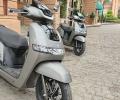
India's electric two-wheeler market has seen record penetration, exceeding 11.2 per cent, driven by crude oil price fluctuations. This surge has led to an unexpected crisis for Indian OEMs, with unfulfilled customer demand reaching 20-30 per cent and average waiting periods exceeding four weeks, a situation expected to intensify during the upcoming festival season.

In August, Hyundai recorded its highest ever domestic sales for the month with 54,396 units sold, marking a 23.6 per cent Y-o-Y increase. The Creta Electric currently anchors Hyundai's mass-market electric portfolio, while the Ioniq 5 caters to the premium end

Hardeep Singh Brar, President and CEO of BMW Group India, has urged state governments like Delhi to remove price caps on road tax benefits for electric vehicles (EVs), arguing that such limits deter luxury-car buyers and hinder the transition to cleaner mobility in pollution-affected regions.

koda Auto Volkswagen India is actively exploring various approaches to penetrate India's burgeoning electric vehicle (EV) market, including importing global models, local assembly, and developing highly localised products, as EV penetration is expected to reach 17-18% by the end of the decade.

Researchers at NIT Rourkela have patented a novel hybrid energy-storage system designed to significantly improve the efficiency and lifespan of electric vehicle batteries. This innovation addresses common issues like low power density and thermal stress by integrating supercapacitors with a simplified architecture, making EVs more reliable, especially in urban driving conditions.

Tata Motors expands its market leadership in India's electric passenger vehicle (ePV) segment, capturing 39 per cent of the market in Q1FY27, while simultaneously strengthening its position as the nation's second-largest carmaker amidst fierce competition and rapid market growth.
Skoda Auto is strategically navigating the competitive Indian automotive market by prioritising profitable growth, exploring new powertrain options like CNG and a limited diesel return, and gearing up for a locally produced electric SUV, all while expanding its retail footprint.

Electric vehicle retail sales in India reached a new monthly record of 3,27,901 units in July, marking a 66 per cent increase over the previous year, with nearly one in eight vehicles retailed now being electric.

India's EV ecosystem is growing, but remains too underdeveloped to cushion a major oil supply shock.

India's electric vehicle market achieved a significant milestone in June 2026, accounting for over 12% of total vehicle retail sales for the first time. This growth, driven by strong demand across electric two-wheelers, passenger vehicles, and commercial vehicles, saw overall EV retail sales surge by 63% year-on-year to a record 306,220 units, indicating a mainstream shift in mobility.

"There is a sharp jump that we have seen in bookings of EVs... The jump, at least in our case, in just two months, it is about 2 to 2.5 times of what it used to be"

Indian passenger vehicle manufacturers are significantly increasing production and stocking dealerships in anticipation of strong festival season demand, with new launches planned and supply bottlenecks being addressed. However, the industry faces potential moderation in growth during the second half of FY27 due to a high base from last year's post-GST surge, commodity inflation, and elevated inventory levels.

The initial public offering (IPO) of auto components maker Hero Motors Ltd was fully subscribed on its first day of bidding, receiving bids for 1.38 times the shares on offer, with strong interest from retail investors.

Indian two-wheeler buyers are increasingly opting for feature-rich, higher-end variants and premium motorcycles, driven by technology, safety, and easier access to finance, according to TVS Motor Company. The company is also exploring alternative electric motor technologies to secure its supply chain amidst growing EV penetration.

Fuel prices have risen by about Rs 7.5 per litre since May 15, as global crude oil prices surged due to the ongoing conflict in West Asia and supply concerns around the Strait of Hormuz.

India is significantly expanding its crude oil sourcing to Latin America, with Venezuela emerging as a major supplier, as geopolitical disruptions in the Middle East and the Strait of Hormuz compel the world's third-largest oil consumer to diversify its energy supplies.
TVS Motor Company reported a significant 56.8 per cent year-on-year increase in net profit to 1,036 crore in Q1FY27, driven by record sales volumes, an improved product mix, and robust demand in both domestic and international markets, with management anticipating continued double-digit industry growth.

Mercedes-Benz India plans to continue introducing hybrid vehicles, including the new AMG E 53 plug-in hybrid EV, to meet consumer demand, viewing hybrids as a crucial bridge to full electrification despite the absence of supportive government policies.
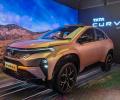
India's electric passenger vehicle market saw an 87.4 per cent year-on-year increase in FY26, reaching 233,246 units, primarily driven by the mid-size SUV segment (20-30 lakh price bracket), while the entry-level segment (sub-10 lakh) experienced a decline.

India's hydropower generation has been significantly constrained in July due to the El Nio effect, which has weakened the southwest monsoon and reduced reservoir levels. This decline, following a 21 per cent year-on-year drop in June 2026, is forcing greater reliance on coal generation and straining grid flexibility amidst rising power demand.

India's automobile retail sales reached an unprecedented 24.23 lakh units in August, marking a 17.51 per cent year-on-year growth, with alternative fuels (CNG, hybrid, and electric) collectively surpassing petrol in the passenger vehicle segment for the first time.

With Konarc, the company has moved deeper into the mass-market e2W segment.

Corporate India is projected to offer salary increments ranging from 8.6 per cent to 10.2 per cent across various industries in the financial year 2026-27, primarily fuelled by a sustained demand for skilled and execution-focused talent, according to a TeamLease Services report.
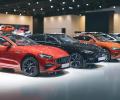
Total automobile retail sales in India surged by 25.89 per cent year-on-year to 25,91,138 units in July, driven by GST rationalisation, ease of retail finance, and favourable festival timing, according to the Federation of Automobile Dealers Associations (FADA). This marks the first time all vehicle categories recorded their best-ever July sales.
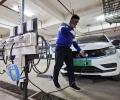
India's electric vehicle (EV) market experienced a significant surge in financial year 2025-26 (FY26), with e4W registrations nearly doubling and e2Ws growing by over 20%, propelled by expanding charging infrastructure, diverse model launches, and accessible financing.

The updated Maruti Suzuki Baleno redefines the premium hatchback segment in India with its aggressive new look, advanced Level 2 ADAS features, and a more fuel-efficient Z series petrol engine, catering to the evolving demands of tech-savvy car buyers.

Mercedes-Benz India is exploring a larger role for plug-in hybrid electric vehicles (PHEVs) in its portfolio, with plans to potentially introduce the technology in more models beyond the newly launched S-Class plug-in hybrid. This strategy aims to cater to luxury car buyers who are hesitant about fully electric vehicles due to concerns over charging infrastructure and range.

The Tamil Nadu Assembly has unanimously adopted a resolution, moved by Chief Minister C Joseph Vijay, urging the Centre to recognise Tamil as the principal language of the Madras High Court. The resolution highlights Tamil's classical status and the need for judgments to be available in the local language, while also addressing historical demands and constitutional provisions.

Mahindra and Mahindra (M&M) recorded the sharpest acceleration among large players, with EV retail jumping to 33,513 units from 7,139 units, an almost 5-fold jump, aided by strong demand for new launches.

China sailed through the crisis in the Strait of Hormuz relatively unscathed even as the impact of its steps shielded other consuming nations from having to pay high crude oil prices.
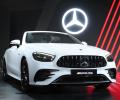
Electric vehicle (EV) penetration in the luxury car segment has seen a drop by nearly 3 percentage points in the GST 2.0 era with the internal combustion engine versions offering better total cost of ownership, according to industry players. While the trend is also visible in the mass market segment, it is the entry luxury segment that is witnessing a more marked shift towards internal combustion engine (ICE) vehicles as price difference between EV and ICE widened under the new GST rates.
TVS Motor Company is strategically positioned for sustained outperformance in the domestic two-wheeler industry, propelled by increasing market share in scooters, premium motorcycles, electric vehicles (EVs), and robust export growth, according to analysts.
Government schemes such as the PM E-Drive initiative, with allocations of around Rs 2,000 crore for charging points deployment, are helping accelerate rollout

BMW Group India says every Re 1 depreciation in the rupee against the euro trims its profit margin by about 1 per cent, prompting the company to consider further price increases.
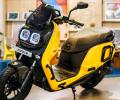
India's home-grown EV startups say the government's auto PLI scheme is helping big players while shutting out innovators building electric two- and three-wheelers from scratch.

'...as we believe with the adoption of AI, our IT services companies' revenue models will have to undergo a reset, which may in turn impact their potential for earnings growth.'

India's domestic passenger vehicle sales experienced a robust 24.6 per cent year-on-year increase in June, propelled by favourable government policies like income tax relief and repo rate cuts, alongside resilient rural demand, even as global crude oil prices pose potential cost pressures.

Nissan Motor India aims to achieve a fourfold increase in domestic sales, targeting 100,000 units annually, and export another 100,000 vehicles from its Chennai plant by financial year 2027-28 (FY28), marking a significant revival of its presence in the Indian passenger vehicle market.

LIC is the only brand in the Brand Finance India 100 2026 report that has a top five rank in both brand value and brand strength.

India's leading passenger vehicle manufacturers are significantly increasing investments and factory capacities, alongside planning major product launches for FY27, driven by strong confidence in sustained domestic demand growth despite global geopolitical tensions and supply chain risks.
